
Lessons to end postpartum hemorrhage
First webinar in a four-part series sharing lessons from the Accelerating Measurable Progress and Leveraging Investments for Postpartum Hemorrhage Impact (AMPLI-PPHI) project. Organized by Jhpiego.

©UNFPA.
Nurse Eugenia providing Amina, 15, with an antenatal checkup on an island in the Ibo District, Mozambique, in may 2023.
Home > Accelerate maternal and newborn survival and wellbeing > Quality of Care Network
The Network for Improving Quality of Care for Maternal, Newborn and Child Health (Quality of Care Network), works to ensure that every pregnant woman and newborn receives good quality care throughout pregnancy, childbirth and the postnatal period. The World Health Organization, together with country governments and partners established the Quality of Care Network in 2017 as a response to the unacceptably high maternal and newborn mortality and morbidity occurring in health facilities in many countries because of poor quality care.
© UNFPA.
Edinah, a midwife and nurse at Kisugu Health Centre III in Kampala, Uganda, in March 2023. Alongside working with pregnant refugees from Democratic Republic of Congo, she has also encountered a high level of teenage pregnancy.
The Quality of Care Network supports countries in achieving their targets to end preventable maternal, newborn and child deaths, and stillbirths and to work towards universal health coverage by pursuing four strategic objectives:
Build and strengthen institutions and mechanisms for improving quality of care in the health sector.
Accelerate, sustain and scale up implementation of quality of care improvements for mothers, newborns, and children.
Facilitate South-South collaboration to facilitate and sustain high quality care to achieve reliable maternal, newborn and child health quality of care. See the Quality of Care Learning Hub.
Develop or strengthen, and sustain institutions and mechanisms for accountability for maternal, newborn and child health quality of care at scale based on a strengthened measurement agenda.
Source: WHO 2021
Nationally, the Quality of Care Network countries:
Globally, the Quality of Care Network:
Source: Quality of care network review and preparations for the next phase of the unfinished agenda for MNCH quality of care, Hera, 2022.
© UNFPA.
A newborn with a midwife in Bangladesh in March 2023.
©WHO/Gato Borrero.
Father providing Kangaroo Mother Care in Da Nang Hospital for Women and Children, Vietnam, in July 2010.
Phase 1 of the Network ran from 2017-2023. In phase 2 of the Network, from 2024, work of Quality of Care Network is geared to accelerate progress for maternal and newborn survival and wellbeing and reducing stillbirths in the countries that are part of the Network, in support of Every Woman Every Newborn Everywhere.
The priority will be to roll-out life-saving interventions at sub-national level to address the leading causes of maternal and newborn mortality and stillbirths, in line with Every Woman Every Newborn Everywhere’s priorities.
There are currently 11 country governments leading the Quality of Care Network: Bangladesh, Côte d’Ivoire, Ethiopia, Ghana, India, Kenya, Malawi, Nigeria, Sierra Leone, Tanzania, and Uganda. They are supported by the World Health Organization, UNICEF and UNFPA, and, over the years, a growing partnership of development organizations, NGOs, funding agencies, professional associations and universities. Partners include:
©UNFPA.
Dr Zinah weighing and measuring the height of Aisha at her clinic in Aden, Yemen in February 2022.

First webinar in a four-part series sharing lessons from the Accelerating Measurable Progress and Leveraging Investments for Postpartum Hemorrhage Impact (AMPLI-PPHI) project. Organized by Jhpiego.
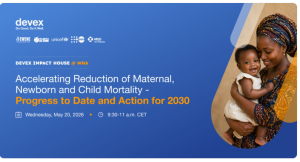
An event during the WHA79 to share high-level messages from the EWENE-Child Survival Action progress report.
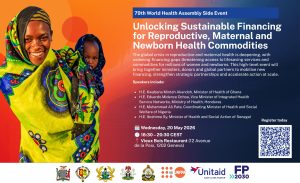
A reception during WHA79

These messages were developed by the United Advocacy Working Group for Maternal, Newborn and Child health.
Posters presented by 40 country delegations at the International Maternal Newborn Health Conference 2026.
International Maternal Newborn HealthConference (IMNHC) 2026 These key messages and advocacy asks are intended to
