Home > Accelerate maternal and newborn survival and wellbeing
Do better, faster
4.5 million women, adolescent girls and babies continue to die every year during pregnancy, childbirth and the first month after birth , most of them from causes that could be prevented if they had access to quality, affordable, equitable and respectful care.
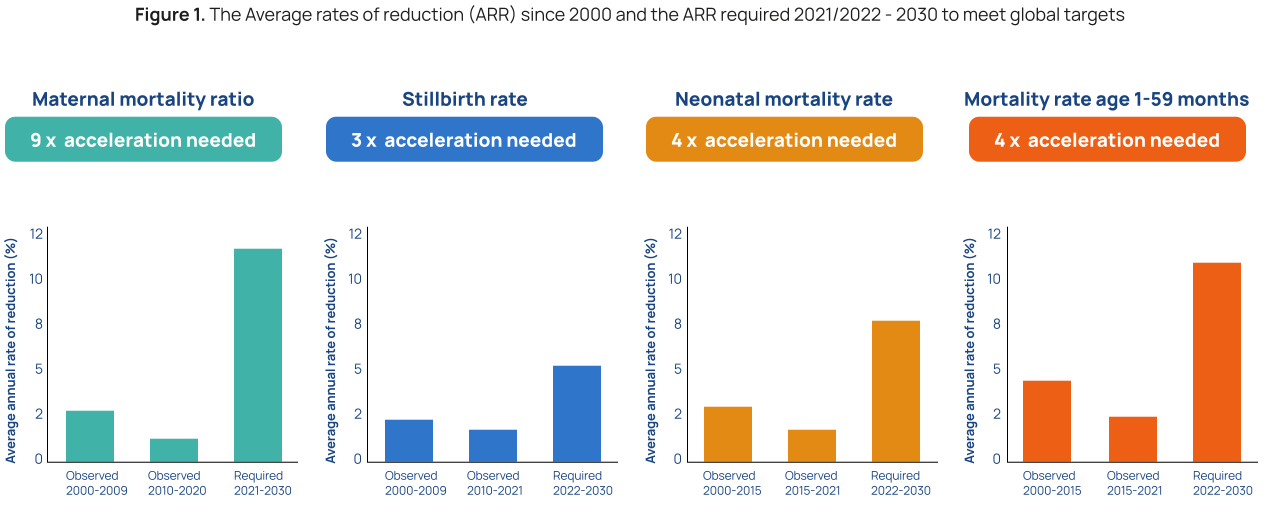
We must do better, and faster, and reduce mortality...
…to meet the global commitment of the Sustainable Development Goals and the Every Woman Every Child Global Strategy targets. At the 2024 World Health Assembly, 195 countries endorsed Resolution 77.5 for Acceleration towards the Sustainable Development Goals Target for maternal newborn and child mortality (MNCH).
[1] Maternal and newborn health key advocacy messages, PMNCH, May 2023. [2] PMNCH, the Commission on Investing in Health 3.0, Concept Note for the PMNCH Board. [3]UNFPA, UNICEF, UNDESA, World Bank Group, World Health Organization, Trends in maternal mortality, 2000-2020: PDF Link [4] UNICEF Data Section, 2023: https://data.unicef.org/topic/child-survival/stillbirths/ [5] World Health Organization, Newborn Mortality Factsheet, 2024: https://www.who.int/news-room/fact-sheets/detail/newborn-mortality
Impact
Lives
By accelerating progress, we stand a chance to prevent the deaths of over 30 million more women and babies by 2030, more than half of them in Sub-Saharan Africa.
Wellbeing
Beyond survival, improving maternal and newborn health reduces health conditions attributed to pregnancy and birth and promotes nurturing care for newborns, which has lifelong benefits.
Human capital
Every $1 invested in high-impact maternal and newborn health interventions would yield $9 to $20 in returns in low- and middle-income countries.
Equity
Sub-Saharan Africa alone accounted for approximately 70% of global maternal deaths in 2020, with Central and Southern Asia accounting for almost 17%. Women in Sub-Sahan Africa and Southern Asia also bear the greatest burden of stillbirths in the world. Sub-Saharan Africa had the highest neonatal mortality rate in 2022, followed by Central and South Asia. This is where we must focus our efforts.