For the Seventy-ninth World Health Assembly
These messages were developed by the United Advocacy Working Group for Maternal, Newborn and Child health.
©UNFPA.
Dr Zuria Alberto is the focal point for the Mobile Brigade from DPS Mueda (Provincial Directorate of Health). She works to make sure that the clinic is on the road as much as possible able to reach remote communities. May 2023.
All the World Health Organization norms and standards, manuals, briefs and more resources on maternal, newborn, child & adolescent health and ageing are available in one place, in a new WHO library. Access it here.
Additional resources are listed below.
Browse other resources:
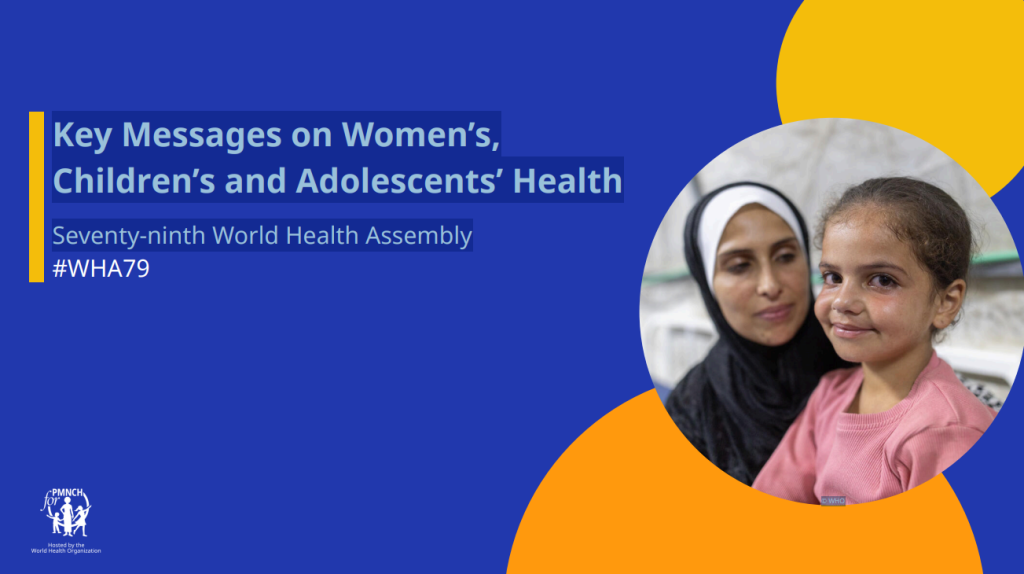
For the Seventy-ninth World Health Assembly
These messages were developed by the United Advocacy Working Group for Maternal, Newborn and Child health.
Posters presented by 40 country delegations at the International Maternal Newborn Health Conference 2026.
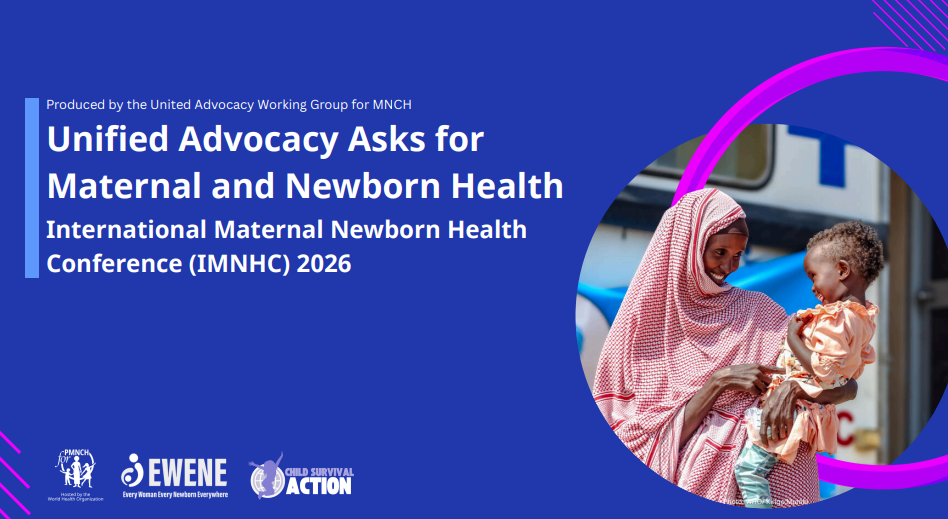
International Maternal Newborn Health
Conference (IMNHC) 2026
These key messages and advocacy asks are intended to equip partners with evidence-based messaging and
resources in the context of IMNHC 2026.
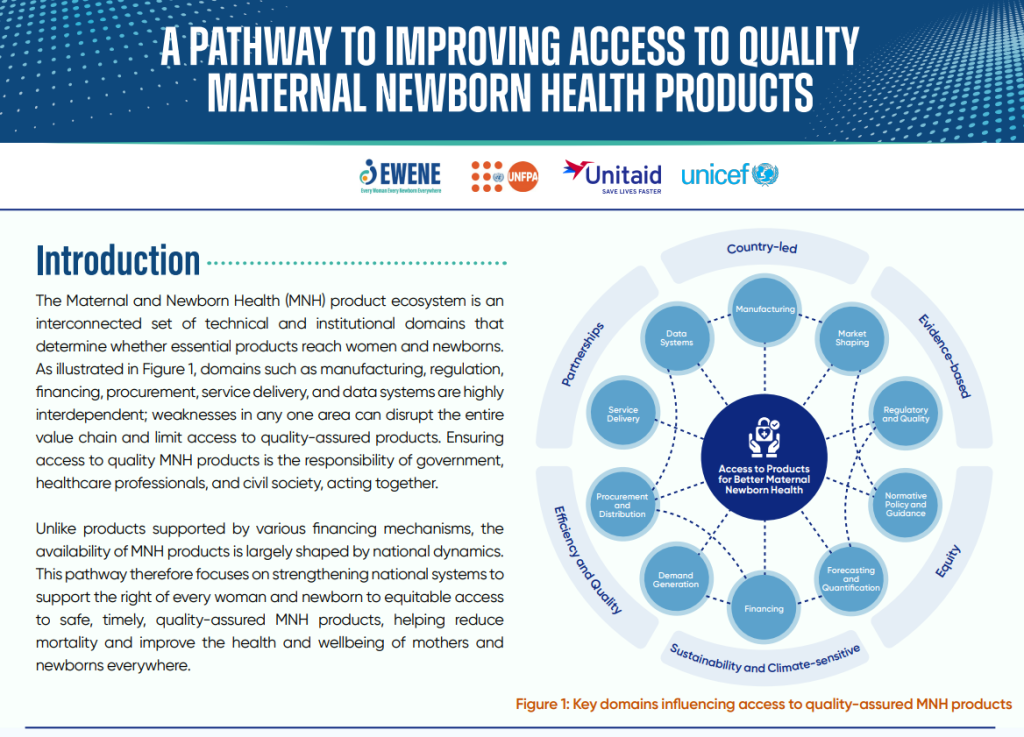
Developed by the EWENE Health Products Working Group, this document outlines a practical pathway to strengthen national systems and improve equitable access to quality-assured maternal newborn health (MNH) products. Targeting a diverse range of stakeholders, it highlights core system domains, cross-cutting challenges, and actionable recommendations to build a more resilient, coordinated, and country-led MNH product ecosystem.
Available in English, French, Spanish, and Portuguese.
A new BMC supplement on Maternal and Perinatal Death Surveillance and Response (MPDSR) looks at what implementation looks like in practice, highlighting research and programmatic insights from low- and middle-income countries working to improve MPDSR systems at national and subnational levels.The supplement ‘Strengthening Implementation of Maternal and Perinatal Death Surveillance and Response (MPDSR): Moving from Data to Action’ features studies that explore:
• Rapid MPDSR tools in humanitarian crises (Tigray, Ethiopia)
• Community engagement to reduce blame and build trust
• The economic case for investing in MPDSR
• Country experiences from Nigeria, North Macedonia, and Sri Lanka
• Measuring implementation progress in Uganda
Additional papers will be published on a rolling basis through 2025.
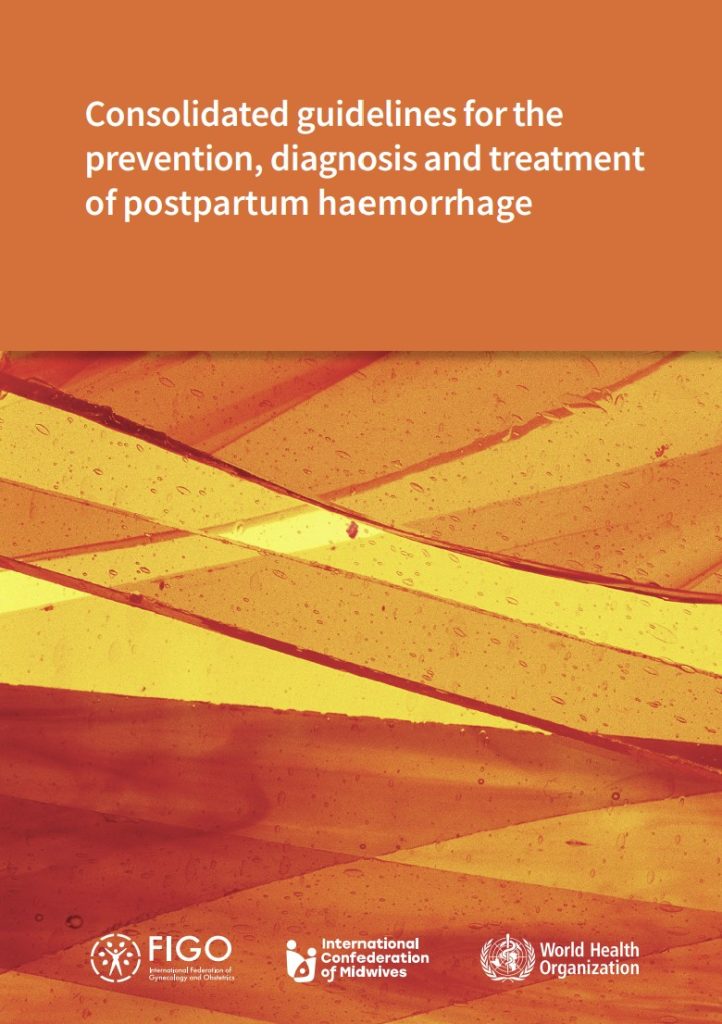
Published by the World Health Organization, the International Federation of Gynecology and Obstetrics (FIGO) and the International Confederation of Midwives (ICM), the guidelines highlight the urgent need for earlier detection and faster intervention for PPH. They focus on the care of women during pregnancy, childbirth and the immediate postpartum period in any health care setting.
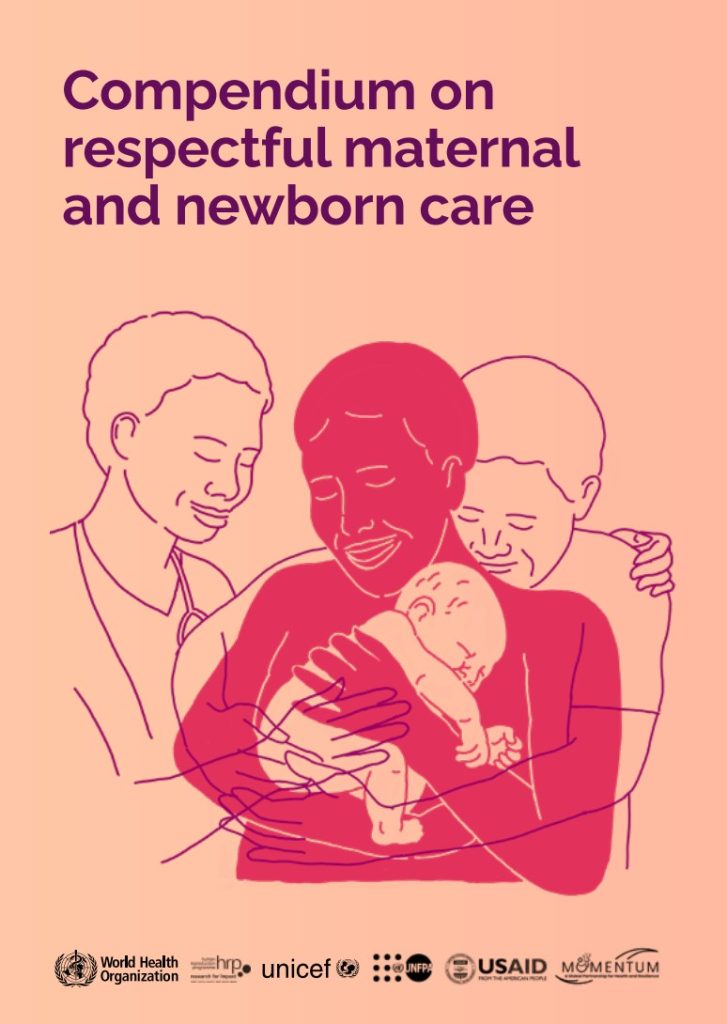
The compendium supports efforts to end mistreatment and achieve respectful maternal and newborn care. It is published by WHO together with UNFPA, UNICEF and the United Nations’ Special Programme on Human Reproduction (HRP), with support from Jhpiego and the MOMENTUM Country and Global Leadership programme.
The purpose of the compendium is to consolidate key evidence, tools and resources to support the practical implementation of respectful maternal and newborn care across different contexts. It provides programme managers with essential background to build a foundational understanding of mistreatment and respectful care. As such, it serves as a comprehensive resource that integrates theory with practice.

Since 2010, countries supported by the Maternal and Newborn Health Fund have reduced maternal mortality by 40%, nearly twice the global rate, contributing to avert an estimated 75,000 maternal deaths. The Maternal and Newborn Health Fund is UNFPA’s flagship initiative to expand equitable access to quality reproductive, maternal, and newborn healthcare.
The Fund’s Annual Impact Report 2024, released this month, details significant progress in reducing maternal and newborn mortality in 32 priority countries. In particular, the report highlights the impact of training and deploying midwives, enhancing emergency obstetric and newborn care, supporting national maternal and perinatal death surveillance and response systems and providing surgical fistula repair.
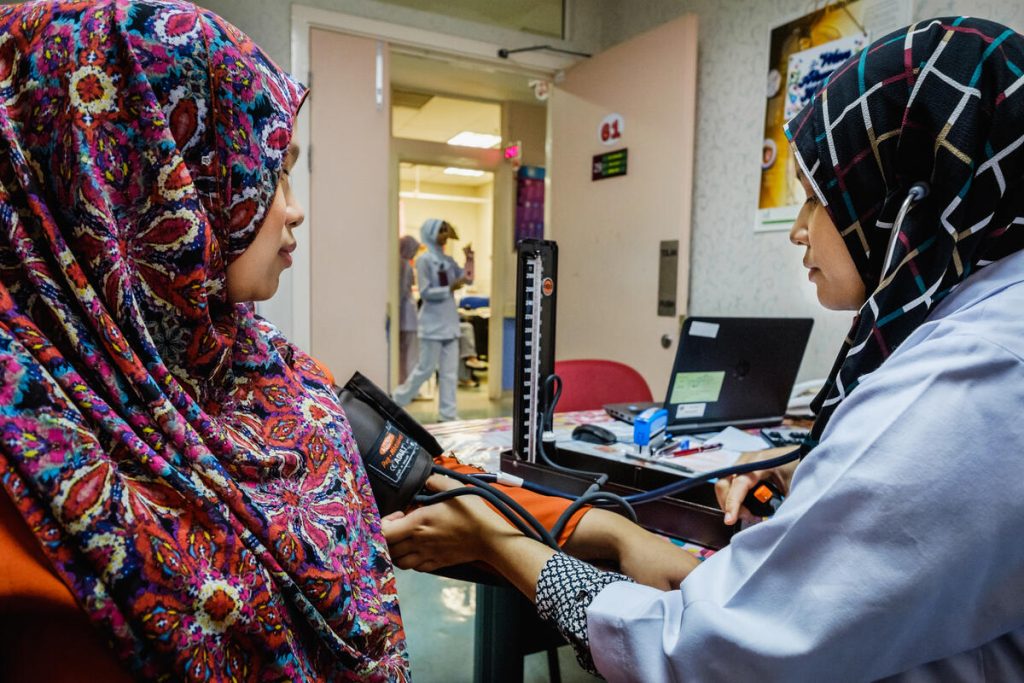
The World Health Organization maternal, newborn, child and adolescent health e-handbook is a new resource for Ministry of health programme managers. It offers step-by-step guidance for implementing effective health programmes, from planning to monitoring and evaluation, with concise overviews of key activities and interventions along the life course. The e-handbook references WHO documents, to ensure that programme managers have access to evidence-based strategies and best practices tailored to various contexts.
This e-handbook contains a prioritised list of documents; for a full list of documents go to the resource library for maternal, newborn, child, adolescent health and ageing: https://uhcc.who.int/mca/

A new journal supplement, “Born Too Soon: progress, priorities and pivots for preterm birth,” led by PMNCH, was published in BMC Reproductive Health last month. The supplement adapts and expands the content from the 2023 WHO report “Born Too Soon: A Decade of Action on Preterm Birth.”
Globally, a baby is born preterm every two seconds, and a preterm newborn dies every 40 seconds, making preterm birth the leading cause of under-five deaths.
Authors highlight the progress made in the last decade, outline the need for improved data to enhance programs, and emphasize the necessity for comprehensive, high-quality, and respectful sexual, reproductive, and maternal health services. They call for investments in small and sick newborn care to ensure equitable access, particularly in conflict areas and among marginalized populations. For the first time, this supplement also focuses on human rights law and global health processes and their role in upholding the rights of women, babies, parents, families, and healthcare providers.